
Palestinian culture is rich and diverse, shaped by centuries of history, deep-rooted connection to the land, and the experiences of displacement, resistance, and resilience in the face of colonization and occupation.
It is influenced by the region’s Arab, Islamic, Christian, and Mediterranean heritage, lending a unique, rich identity to the Palestinian people.
Here are some key elements of Palestinian culture:
1. Language and Literature
Language: Arabic is the primary language spoken in Palestinian communities. Palestinian Arabic has its own dialect, which varies slightly between urban and rural areas.
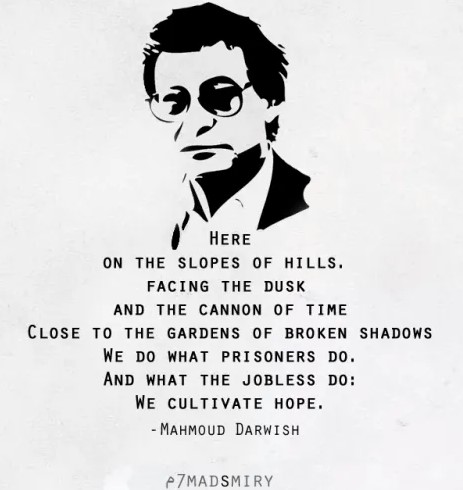
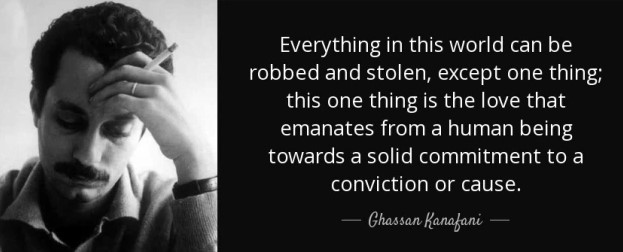
Literature: Palestinian literature is renowned for its poetry, novels, and short stories, often exploring themes of identity, exile, and the longing for home. Poets like Mahmoud Darwish and writers such as Ghassan Kanafani are cultural icons, with their works reflecting the Palestinian struggle, resilience, and sense of community.
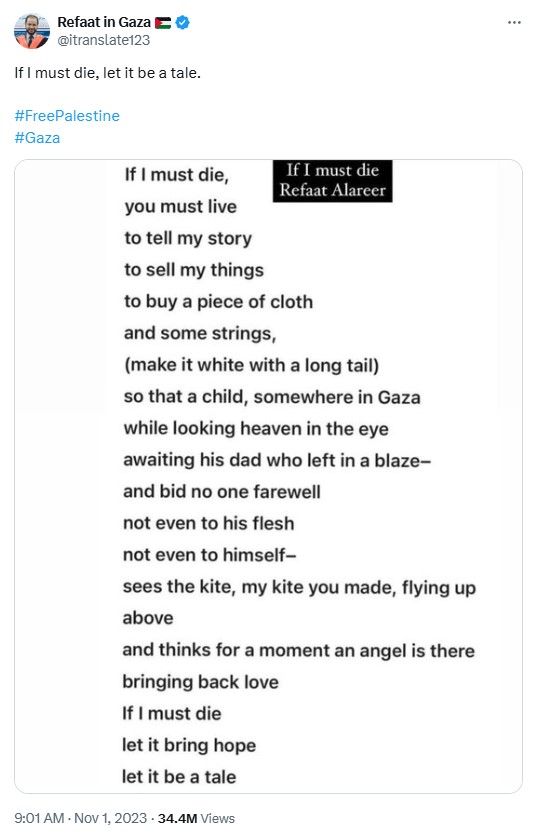
Refaat Alareer was another renowned Palestinian writer, poet, and professor. He is known for his work that vividly portrays the Palestinian experience, particularly the resilience and struggles of those in Gaza as a Gazan himself. After weeks of receiving death threats from Israel, he was killed on December 6, 2023 in a targeted Israeli airstrike. Refaat’s brother and his son, as well as his sister with three of her children were among those killed in the same airstrike.
2. Cuisine
Palestinian food is known for its flavourful, fresh ingredients and unique spices.
Olive oil, za’atar (a spice blend of thyme, sesame, and sumac), chickpeas, and lamb are key ingredients in Palestinian cuisine. Hospitality is central to Palestinian culture, with meals often enjoyed in large gatherings.
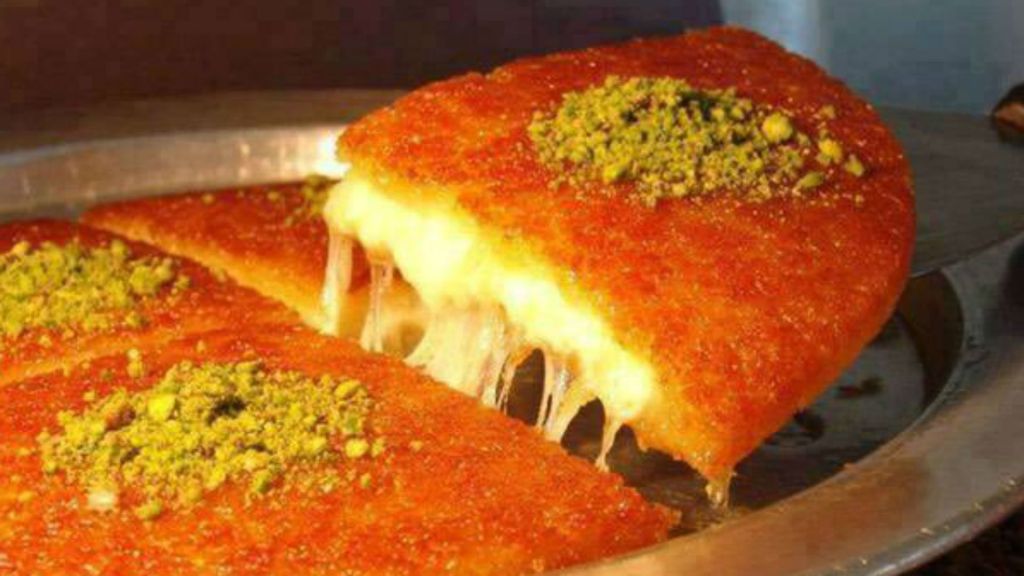
Staples include maqluba (a layered rice and meat dish), musakhan (sumac-spiced chicken and onions served over flatbread), and knafeh (a sweet cheese pastry with a crispy top layer made of flour-based noodles).
Knafeh is thought to have originated in the Levant, with Palestinian cities such as Nablus claiming to be its birthplace, though it is also popular in other parts of the Middle East. The Nablus version, known as “Knafeh Nabulsi,” is considered by many to be the most traditional and authentic form, featuring Nabulsi cheese and a unique preparation method.
Learn how knafeh is made in the video below. The video talks about how Israel stole many Palestinian dishes, including knafeh, and incorporated them into their national cuisine without any due credit.
3. Music and Dance
Dabke (or Dabkeh): This traditional dance, performed at weddings and celebrations, is highly energetic, involving intricate footwork and strong group synchronization. It is accompanied by folk music and instruments like the oud (a stringed instrument), tabla (a drum), and qanun (a type of zither).
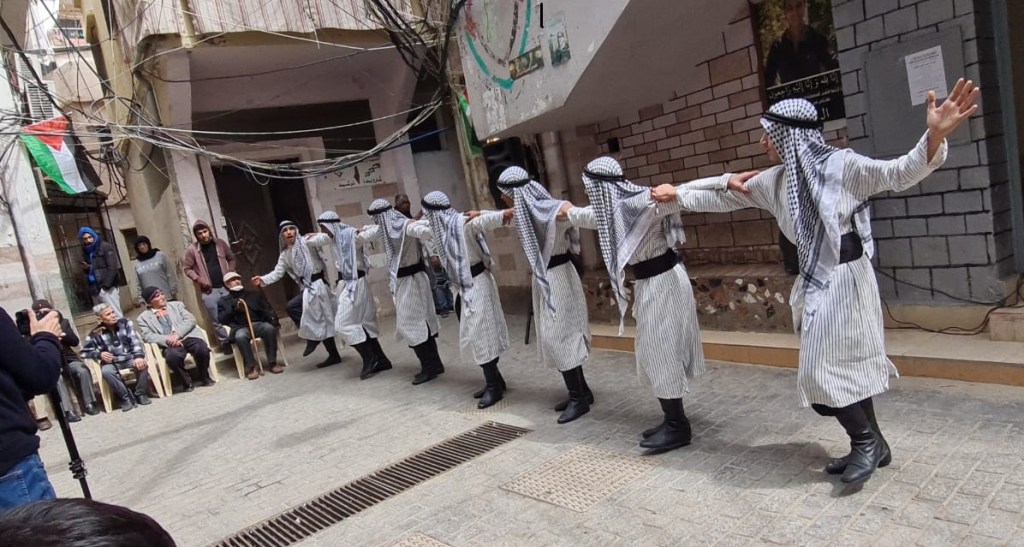
Palestinian music incorporates folk songs passed down through generations, along with contemporary adaptations. The music is often imbued with themes of love, loss, and nationalism.
4. Art and Craftsmanship
Embroidery (Tatreez): Palestinian women are known for their intricate hand-embroidered dresses, each with unique patterns that often indicate the wearer’s region of origin. Tatreez patterns have become symbols of Palestinian culture and identity.
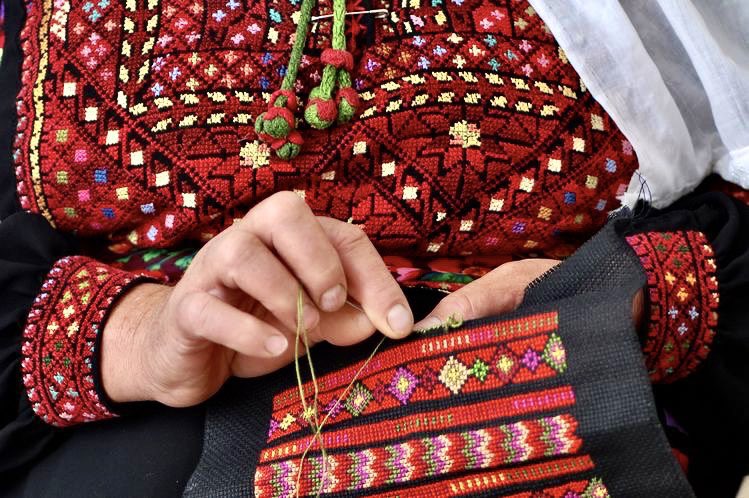
Ceramics and Olive Wood Carving: Craftsmen create beautiful pottery, ceramic tiles, and olive wood carvings, reflecting traditional motifs and cultural symbols. These crafts are commonly sold in local markets and carry historical and symbolic significance.
5. Traditional Clothing
Traditional Palestinian clothing includes the thobe for women, a long embroidered dress that varies by region, and a kufiya (or keffiyeh) for men (also worn by women), a black-and-white checkered scarf that is a part of Palestinian culture and identity.
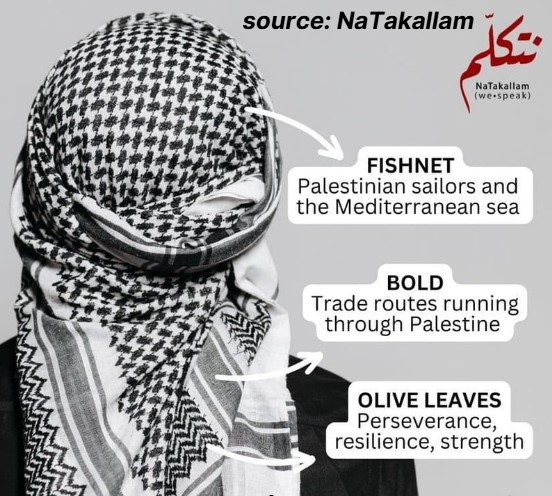
There are three patterns on the keffiyeh (see “Palestinian Symbols” section below for more):
- Fishnet: symbolizes the tradition of fishing and Palestinian fishermen
- Bold lines: represent ancient trade routes that passed through historic Palestine
- Olive leaves: signify the longstanding tradition of olive farming among Palestinian communities, particularly in the West Bank.
While urban clothing is now more Western-influenced, these traditional items are still worn at cultural events and festivals.
7. Religion and Celebrations
The majority of Palestinians are Muslim, but there is also a significant Christian Palestinian minority, particularly in cities like Bethlehem and Ramallah.
Religious holidays, such as Eid al-Fitr and Eid al-Adha, are widely celebrated with special foods, prayers, and family gatherings. For Palestinian Christians, Christmas and Easter are important, with Bethlehem holding special significance as the birthplace of Jesus.
8. Oral Traditions and Folklore
Storytelling is a treasured tradition, with folk tales, proverbs, and legends passed down through generations. These stories often carry moral lessons, humour, and a sense of Palestinian heritage.
Zajal is a type of oral poetry and song improvisation that has been historically popular in rural communities, showcasing wit, humour, and linguistic creativity.

Palestinian symbols such as the keffiyeh, olive tree, key, and watermelon carry deep cultural and political significance, reflecting the Palestinian experience of identity and connection to the land.
1. Keffiyeh
The black-and-white checkered keffiyeh (or kufiya), traditionally worn as a headscarf by farmers, has become a powerful symbol of Palestinian resistance, unity, and identity.
It has three patterns: fishnet, bold lines, and olive leaves (see image below for what they represent).
It gained political significance during the 20th-century Palestinian struggle for self determination in the face of colonization and occupation.
It is now worn by everyday Palestinians as well as anyone who stands with the Palestinian cause. Today, it is recognized globally as a symbol of Palestinian solidarity.
2. Olive Trees

The olive tree is a central symbol of Palestinian culture, heritage, and connection to the land. Olive trees have been cultivated in Palestine for over 6,000 years, making them a central part of both the landscape and Palestinian identity.
Olive farming has been a traditional way of life for Palestinians for centuries, with olives and olive oil being essential to their economy and cuisine.
It is a major source of income for Palestinians, especially in rural areas. It provides livelihoods for around 100,000 families, directly or indirectly, and supports the local economy by providing employment during the harvest season.
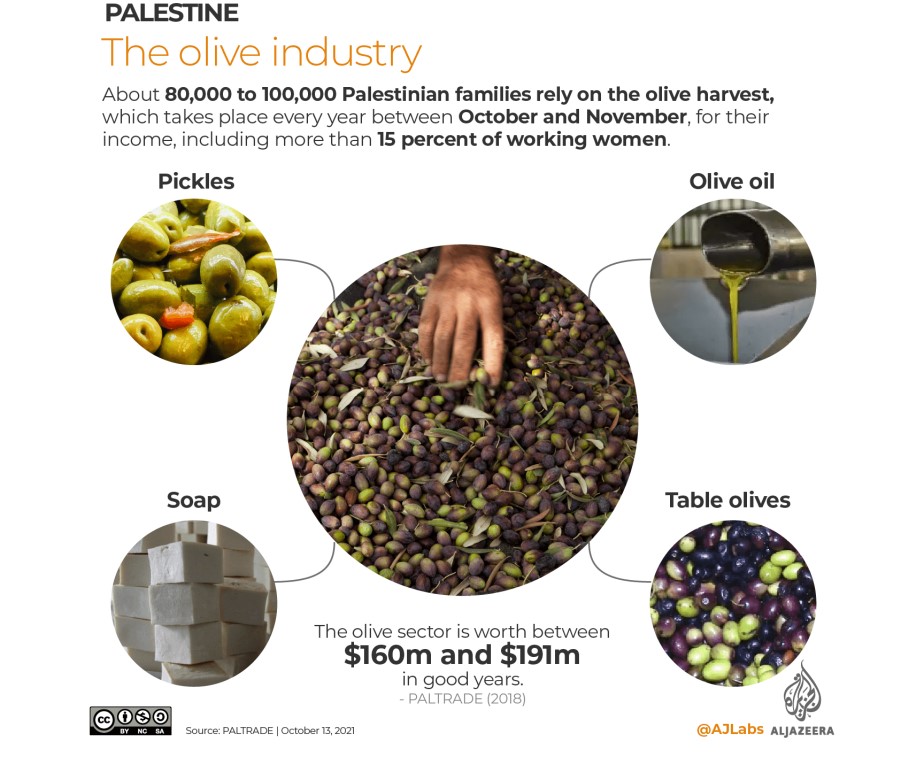
Nablus olive oil soap is one of the most celebrated traditional products of Palestine, renowned for its purity, quality, and historical significance. This soap, handcrafted in the West Bank city of Nablus, has been produced using the same natural ingredients and traditional methods for over a thousand years.
The olive tree represents resilience and longevity as they can live for hundreds of years even under harsh conditions. They often represent a family’s connection to their land and are passed down through generations, holding significant cultural and emotional value.
Olive trees have also become a symbol of Palestinian struggle. Olive trees and entire olive farms in the West Bank belonging to Palestinians are often destroyed by the Israeli army and illegal Israeli settlers who bulldoze or burn them as they take over Palestinian homes and land.
Many Palestinian NGOs, such as the Palestinian Agricultural Relief Committee (PARC), lead initiatives to plant olive trees in areas affected by conflict, aiming to reclaim and protect Palestinian land.
3. Key
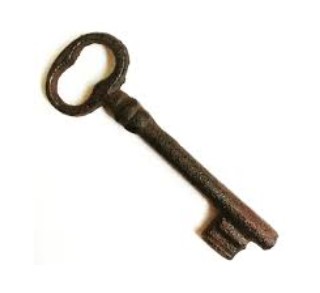
The key is a symbol of the Palestinian right of return. It represents the homes and properties of Palestinians who were displaced or fled during the 1948 Nakba (catastrophe) and subsequent conflicts. Many refugees still keep the keys to their original homes, passing them down through generations as a symbol of their enduring hope to return.
The key of return embodies the collective memory of the Palestinian people and the enduring claim to their right of return. This right is recognized in various international resolutions, including United Nations Resolution 194, which states that refugees wishing to return to their homes should be allowed to do so and that compensation should be paid to those who choose not to return.
The key signifies the enduring Palestinian connection to their ancestral homes. It is often depicted in protests, art, and demonstrations as a call for justice, the right of return, and the ongoing struggle against displacement and occupation.
4. Watermelon

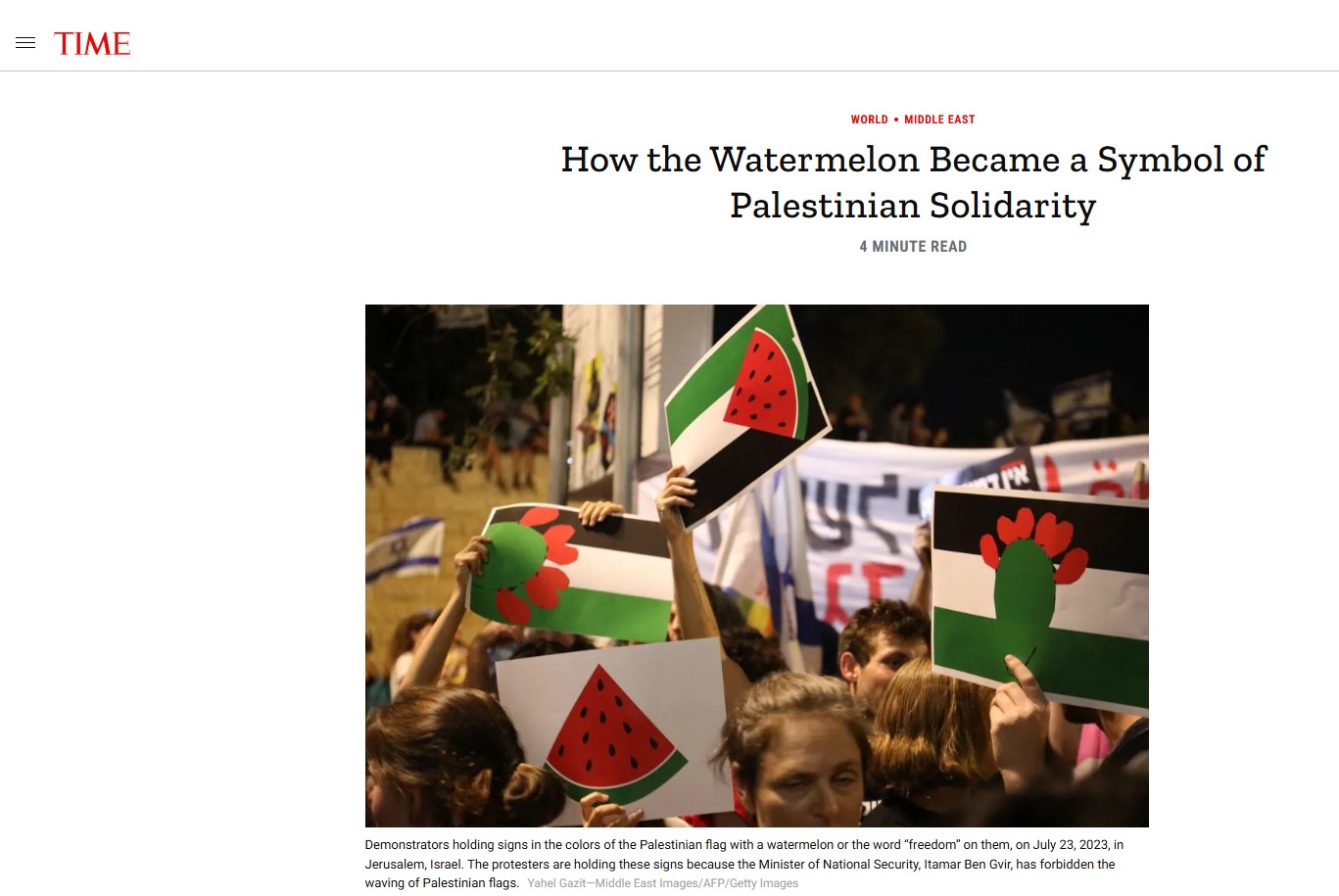
The watermelon has become a symbol of Palestinian identity and resistance. The watermelon’s colours — red, green, black, and white — match the colours of the Palestinian flag.
In 1967, the Israeli government banned public displays of the Palestinian flag or even the use of its colours together in drawings or paintings. This restriction made it illegal for Palestinians to publicly show their national flag or any combination of the flag’s colours. Any displays of the flag led to arrests.
As the colours of the watermelon matched the Palestinian flag, it began to be used as a covert symbol of Palestinian identity, protest, and resistance.
Eventually, Israel even started cracking down on the use of the watermelon. In Gaza, an international journalist recounts how the Israeli army arrested people for carrying sliced watermelons (see TIME article below).
In 1993, as part of the Oslo Accords, the ban on the flag was lifted. However, in January 2024, Israel’s National Security Minister Itamar Ben-Gvir granted power police power to confiscate Palestinian flags. Then in June 2024, the Israeli parliament voted on a bill to ban the display of the flag at state-funded institutions, including universities, which received preliminary approval.
The use of the watermelon in art, street murals, cultural expressions, and in solidarity with the Palestinian cause is a reminder of how the Palestinian identity continues to persist despite censorship and occupation.
 Stop the Gaza Genocide
Leave a comment